Traditional Amphora vs. Clayver:
What Sets Them Apart?
Between Tradition and Innovation: Wine in Earthen Vessels Since the 4th Millennium BC
Before Clayver , earthen containers for wine faced two major issues:
1. Natural contamination from metallic ions in the clay (lead, cadmium, iron) compromising wine safety.
2. Excessive porosity, leading to uncontrolled oxygen exposure and altered wine quality.
The Clayver vessel addresses these challenges head-on, offering a modern solution that stands apart. Its
unique characteristics embody the evolution of winemaking technology, setting it apart from traditional amphorae.
#IamNotaAmphora
Clayver: Inspired by Tradition, Revolutionized by Innovation.
1. Material Composition
Pros of Clayver stoneware: Clayver patent especially developed for the wine, composed of a blend of several European clays, forming a natural stoneware (grès cérame) that ensures uniformity and consistency.
Cons of traditional amphorae: Made from a single type of clay, usually sourced locally, without extensive material selection. This can result in variability in quality and performance.
2. Porosity Control
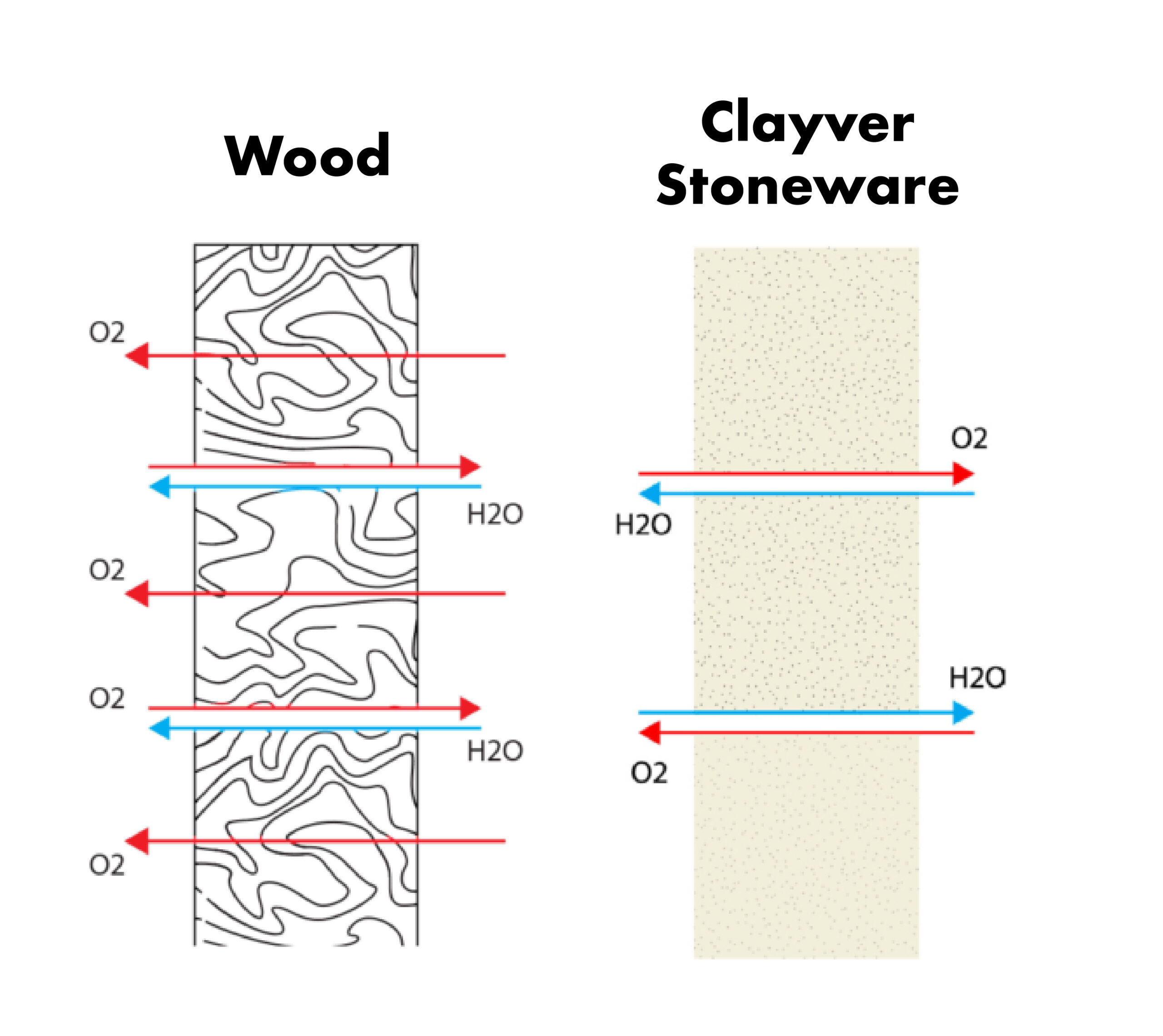
Pros of Clayver stoneware: Designed with stable controlled microporosity that allows for subtle oxygenation while preserving the acidity, pH balance and aromatic potential of the wine. Impermeable, they require no measures to prevent evaporation.
Cons of traditional amphorae: High porosity, which can lead to excessive oxygen exchange. Often requires the use of coatings or treatments, which can alter the characteristics of the wine.
3. Safety and contamination
Pros of Clayver stoneware: Fully food certified in accordance with EU regulations (1935/2004/EC, 2005/31/EC) and extensively tested to ensure no migration of harmful substances, even under acidic conditions (pH << 2.5).
Cons of traditional amphorae: Risks of contamination by metal ions (lead, cadmium, iron) naturally present in clay. Without rigorous testing, these substances can compromise the safety of the wine.
4. Traceability and accuracy
Pros of Clayver stoneware: Each batch of clay is assigned a unique number, ensuring complete traceability and allowing precise quality control for each vessel.
Cons of traditional amphorae: Little or no lot specific traceability, making it difficult to track material origin or ensure uniformity between units.

5. Durability and thermal inertia
Pros of Clayver stoneware: Fired at high temperatures (up to 1200°C), ensuring excellent durability as it is very strong and thermal inertia, which allows constant temperatures to be maintained during fermentation and aging.
Cons of traditional amphorae: Fired at relatively low temperatures (1000°C or less), making them less durable and more prone to cracking.
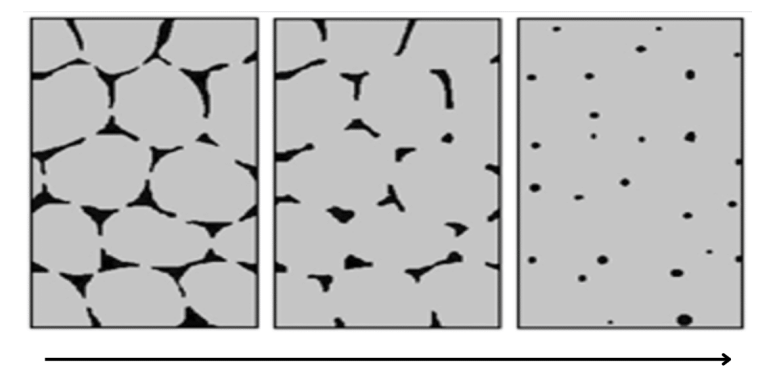
Mastering Sintering: Controlled Porosity with Clayver Stoneware
6. Bacterial development
Pros of Clayver stoneware: Its dense, less-porous and inert structure significantly reduces bacterial growth, making it safer and easier to clean.
Cons of traditional amphorae: High porosity can create an environment conducive to bacterial growth, requiring more intensive cleaning and monitoring.
7. Sustainability
Pros of Clayver stoneware: Sustainability is at the heart of its design, with a life cycle analysis (LCA) that assesses and minimises its environmental impact throughout production and use.
Cons of traditional amphorae: Traditional methods do not prioritize environmental considerations.
Drawing inspiration from the ancient amphora — historically used to let wine breathe without imparting
tannins or flavors — Clayver brings a modern revolution to winemaking.
With a scientifically optimized solution, Clayver prioritizes safety, consistency, and sustainability, all while preserving and enhancing the wine’s exceptional quality.
Article written in collaboration with themas-vin.com – Texts by Laure Thevenin and Juliette Carrere