PCA Analysis, SO₂ Management
and Color Evolution 12 Months of Data
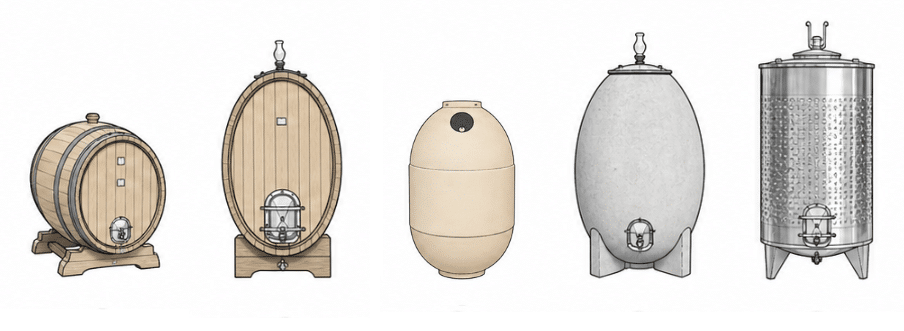
Micro-oxygenation is often associated with porosity or sensory tasting. But how can the real impact of a vessel on wine evolution be measured concretely? This comparative study conducted by the University of Verona provides an analytical answer to this question and highlights the following key indicators:
• Electrochemical profile (PCA)
• SO₂ management
• Color evolution (ΔE)
The WineSens Study: Comparison of 9 Vessels

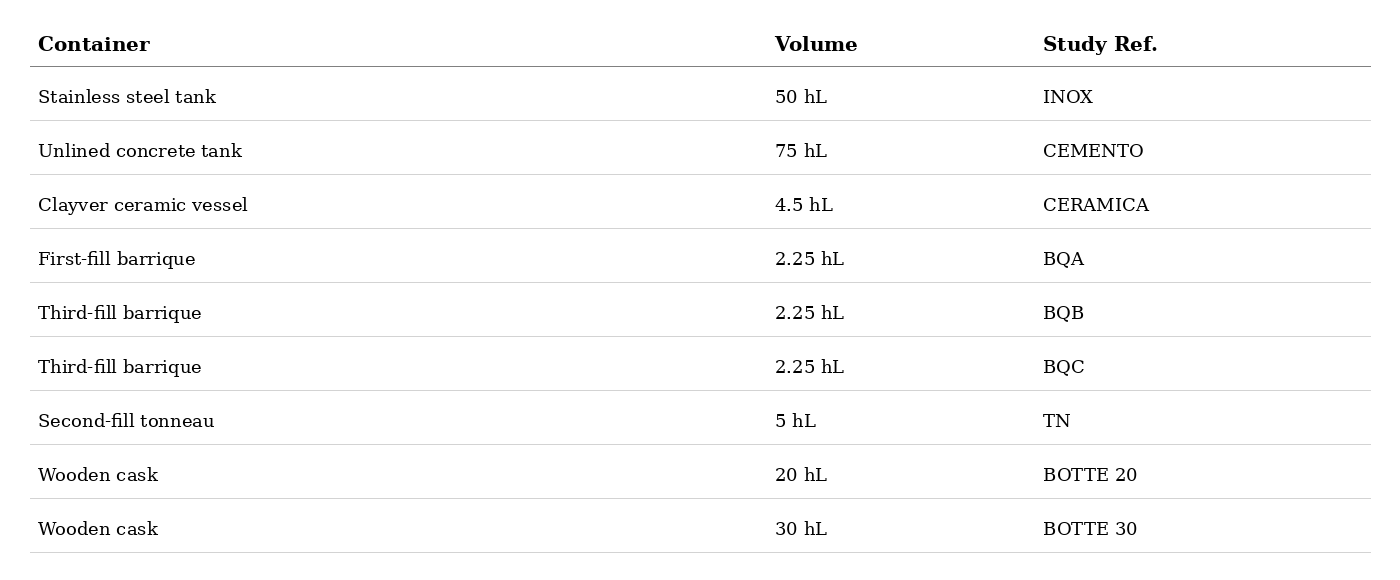
The WineSens project by the University of Verona Italy (IRIS Project 3243, Department of Biotechnology), led by Professor Maurizio Ugliano in partnership with Farina Wines Valpolicella, aims to monitor in real time the evolution of the same red wine across 9 different vessels, including a 450L Clayver ceramic tank, using advanced analytical sensor systems.
• The wine used was an IGT Rosso Verona, made from Corvina, Corvinone, and Rondinella grapes, vintage 2020, with the following initial parameters: pH 3.49; total polyphenols 1,017 mg/L at T0.
• Six sampling points were carried out over a 12-month period (T0: June 2021 to T6: April 2022).
An Electrochemical Signature of Aging
One of the key findings of this study lies in the wine’s electrochemical analysis, performed at each sampling point using a Palmsense PS3 potentiostat and NomaSense electrodes.
Unlike an isolated parameter, this method measures the overall fingerprint of oxidizable compounds, providing a direct reading of the wine’s true redox state throughout aging.
PCA analysis of data from T4 to T6 reveals a clear separation between vessels according to their oxidative dynamics. Axis F1 alone explains 80.31% of the total data variance, ranking the vessels from the most oxidative (left side) to the least oxidative (right side):
Barrels → Clayver → Concrete → Stainless Steel
Without prior integration of permeability or OTR data, the analysis spontaneously reconstructs this same organization.
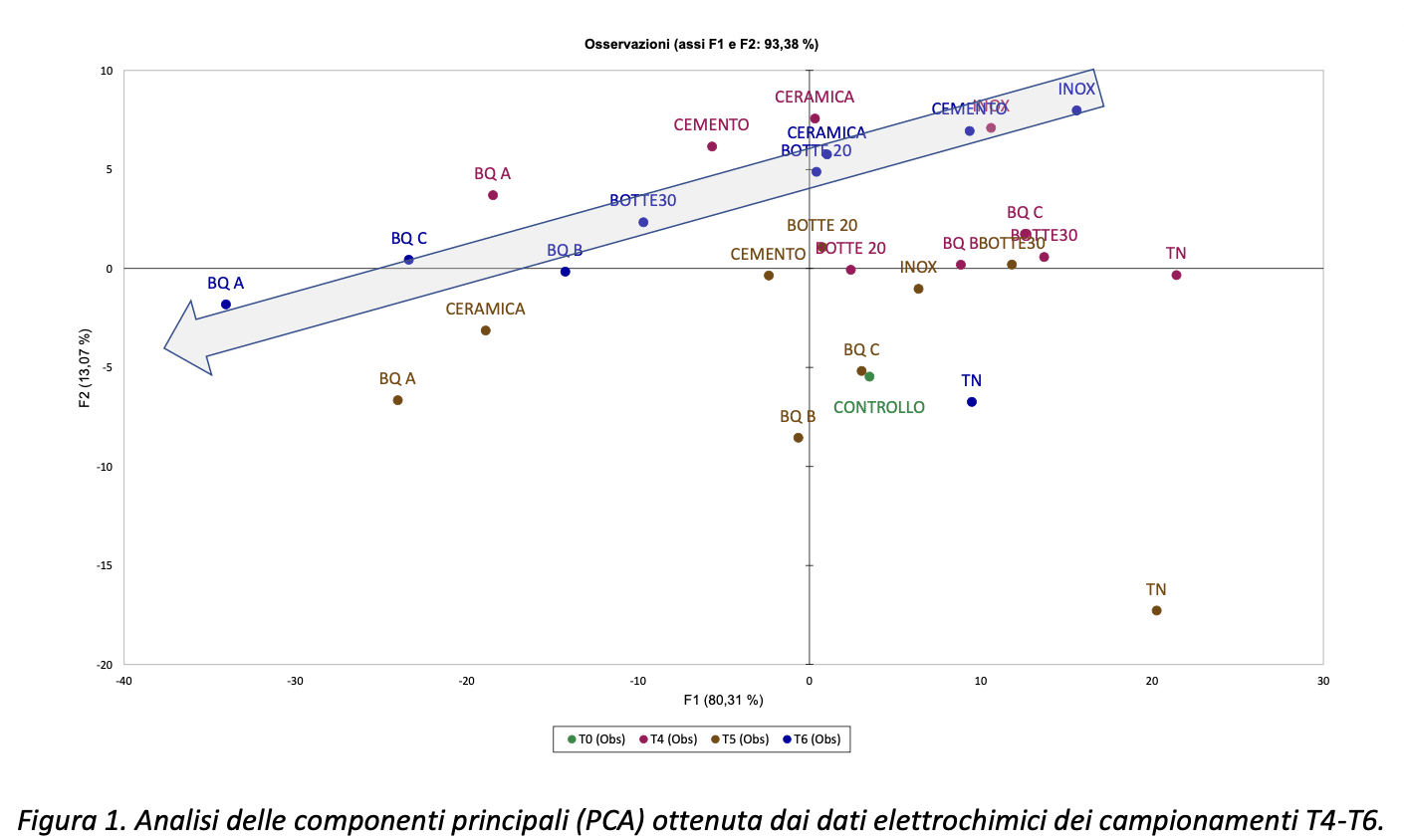
Figure 1. Principal component analysis (PCA) derived from the electrochemical data from the samples
Clayver positions itself within a distinctive zone of balance, enabling controlled evolution without excessive oxidative drift.
Sensory confirmation: during the technical tasting conducted at Farina Wines winery, wines aged in stainless steel and concrete were described with reductive characteristics. By contrast, the wine aged in the Clayver ceramic vessel showed no such attributes, providing direct sensory confirmation, both on the nose and palate, of oxygen contribution.
Free SO₂: Oxidative Dynamics in Practice
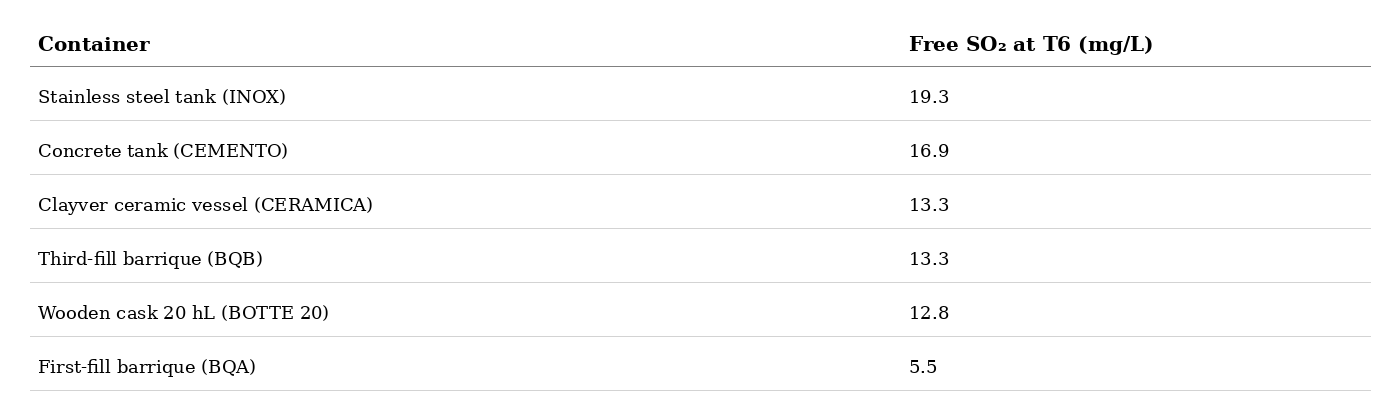
Free SO₂ is gradually consumed throughout the aging process, particularly through oxidation reactions. Monitoring its evolution therefore provides a practical indicator of the wine’s actual oxidative dynamics.
At T6, the most relevant observation point, as it is sufficiently removed from the metabisulfite addition carried out between T4 and T5, the differences between vessels become especially clear.
The results show a trend consistent with the electrochemical observations: the least permeable vessels retain higher levels of free SO₂, while more open vessels display a more pronounced consumption.
Clayver stands out within a distinctive intermediate zone.
The ceramic vessel supports the wine’s evolution while maintaining a controlled analytical trajectory. This balance also has a visible impact on the wine’s visual profile, measured here through colorimetric analysis.
Wine Stability, Visible Even in Color
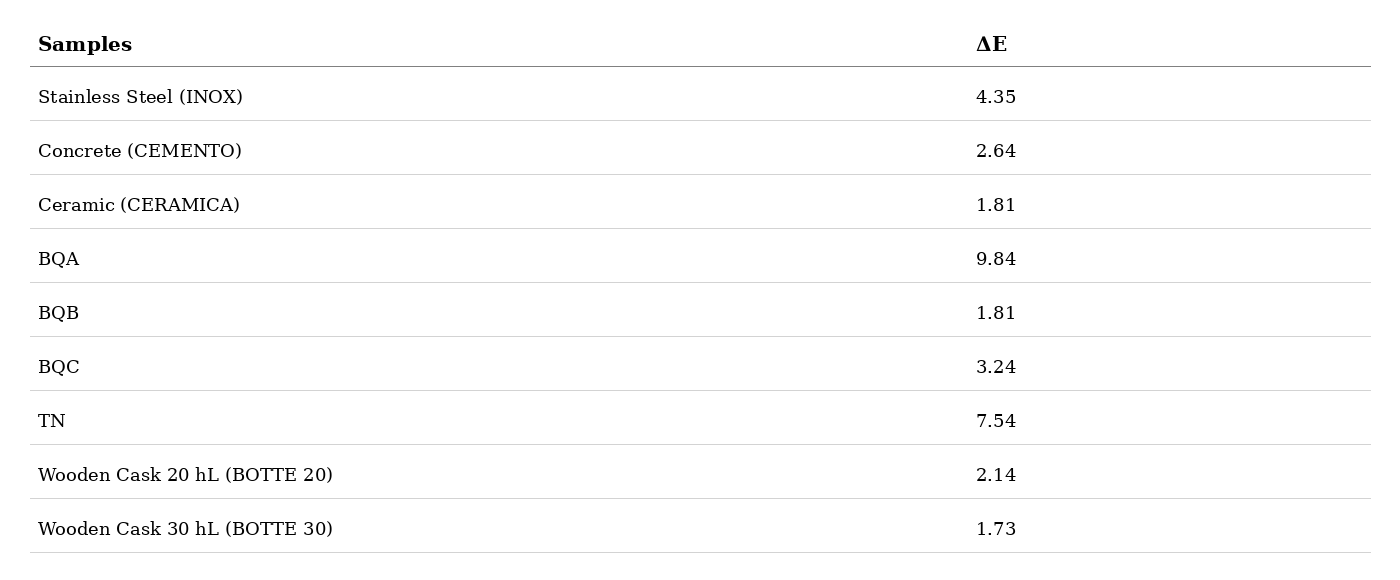
ΔE measures the perceptible color difference between each wine and the reference wine. A ΔE above 2.70 is generally considered visible to the naked eye.
With a ΔE of 1.81, Clayver shows one of the lowest deviations among the vessels studied, maintaining a colorimetric profile particularly close to the original wine.
This result confirms the previous findings: an active yet controlled analytical evolution, allowing the wine to develop without excessive oxidative drift.
A strong analytical consistency confirming Clayver’s ability to support wine evolution with precision
Polyphenols, tannins, and anthocyanins were also monitored throughout the aging process, providing complementary insight into the evolution of the phenolic matrix.
In the Clayver vessel, the data confirm a progressive maturation consistent with the other analytical indicators: moderate redox activity, controlled SO₂ consumption, and low colorimetric drift.
The vessels are designed with stable, controlled microporosity, enabling subtle oxygen transfer while preserving acidity, pH balance, and the wine’s aromatic potential.
By slightly increasing or decreasing the firing temperature (by a few degrees), Clayver can provide two distinct levels of microporosity within each vessel.
credits articolo themas-vin.com | Juliette Carrere